
How I Would Actually Do A First Safari
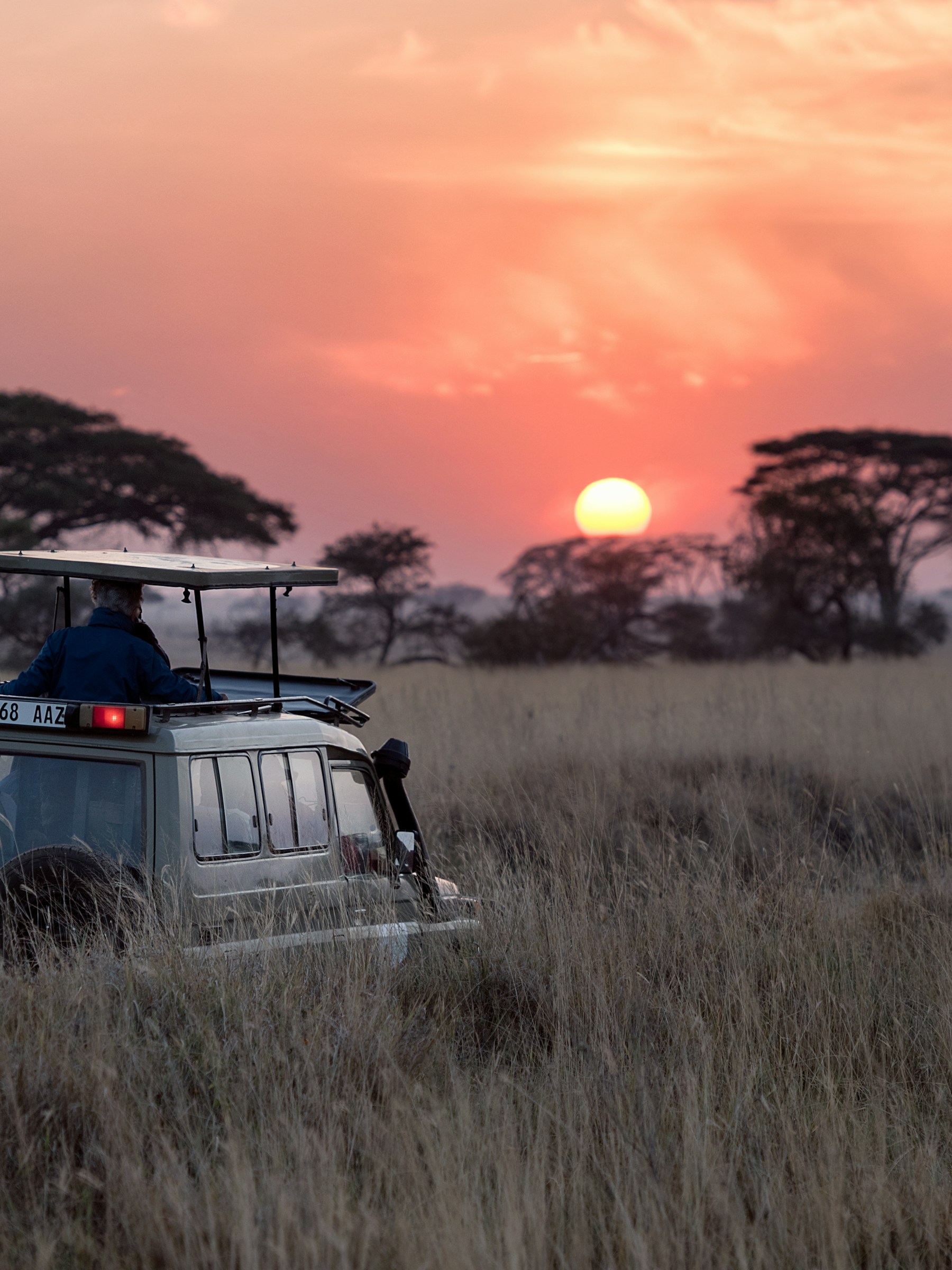
Namibia, Botswana, Tanzania, South Africa — once, for one traveler.
A first safari is not a circuit. It is a sequence of camps, light, and quiet that has to match how you actually travel: how early you will rise, whether you want a private vehicle, whether a tented room is a gift or a test. I start there, not with a map of “the big five.”
Africa is a specialty I have kept for years. The properties I use are chosen for guiding, for the table, and for the hours after the drive — not for a list of logos. If it is your first time, we will not stack three countries because they look impressive on a page.
You will remember the evening, not the checklist.
The Mistake Most First Safaris Make
People search “best first safari Africa” and receive a map: Cape Town, Kruger, Victoria Falls, Okavango, Serengeti, perhaps a beach at the end. That is a brochure, not a trip. It spends the days in the air. It asks you to learn a new camp, a new rhythm, a new guide every two nights. You will see animals. You will not have been on safari.
A first safari should teach you how you like to be in the bush: how early you will rise, whether a private vehicle is worth it (it usually is), whether a tented room is a gift or a test, whether you want walking or only the vehicle, whether silence is the point or you want a camp that talks. Those answers do not come from stacking countries. They come from staying long enough in one landscape.
Namibia, Botswana, Tanzania, South Africa — How I Choose
South Africa is often the gentlest introduction: excellent lodges, shorter flights, a wine country or Cape Town that can hold the days before or after the bush. It is not “lesser.” It is a different density of wilderness. Kruger’s private concessions and the eastern Cape have guiding I trust. If you want a first safari with a city attached, this is often where we begin.
Botswana is water and sky — the Okavango, the Delta’s channels, camps that know how to be still. It is the right first safari if you want wilderness without performing for a crowd, and if you will accept that the days are the camp, the boat, the vehicle, the evening. We do not rush it.
Tanzania is light and distance: the Serengeti, the crater, the migration if the months are right, a coast after if you want the sea. It is the right first safari if you are willing to fly light aircraft and to let a day be long. I will not add Kenya “because we are already there” unless the trip actually needs it.
Namibia is space. Dunes, desert-adapted life, a sky that is the activity. It is the right first safari if you want landscape as much as wildlife, and if a long road is not a problem. It is the wrong first safari if you need a dense Big Five checklist in four nights.
Zambia, where I have stayed in houses that will never appear on a preferred-partner grid, belongs in a later conversation — often as a return, or for travelers who already know they want the river and a certain kind of quiet. A first trip can go there. It should not go there because a map looked complete.
Camps, Vehicles, Seasons
I choose camps for guiding, for the table, and for the hours after the drive. A beautiful tent with indifferent guiding is a bad camp. A simpler tent with a guide who can read a morning is the reason you came. Private vehicles cost more and change the day: you leave when you want, you stay with a sighting, you are not a vote in a group. For most of the travelers I work with, that is not a luxury extra. It is how safari should be done.
Season is not a footnote. Green season is not “worse.” It is different light, different water, different rates, different insects, different crowds. Dry season is not automatically better. The right month depends on the country and on you. We will not pick a date because it is famous. We will pick a date because it matches the trip.
How A First Safari Is Actually Sequenced
Two camps in one country, or one camp and a coast. Enough nights that you stop unpacking. A charter or a scheduled hop that does not eat the day. A night in Johannesburg or Nairobi treated as a landing, not as a city break, unless you want the city. Documents that tell you what to wear at 5:30 a.m. and what to leave in the second bag. Virtuoso relationships help with the lodges that sit in the network. They do not replace knowing which camp should be first. More on that access in What Virtuoso actually gets you.
If this is your first safari, tell me how you actually travel — not how you think a safari guest is supposed to travel. Discovery is complimentary. Inquire here.