
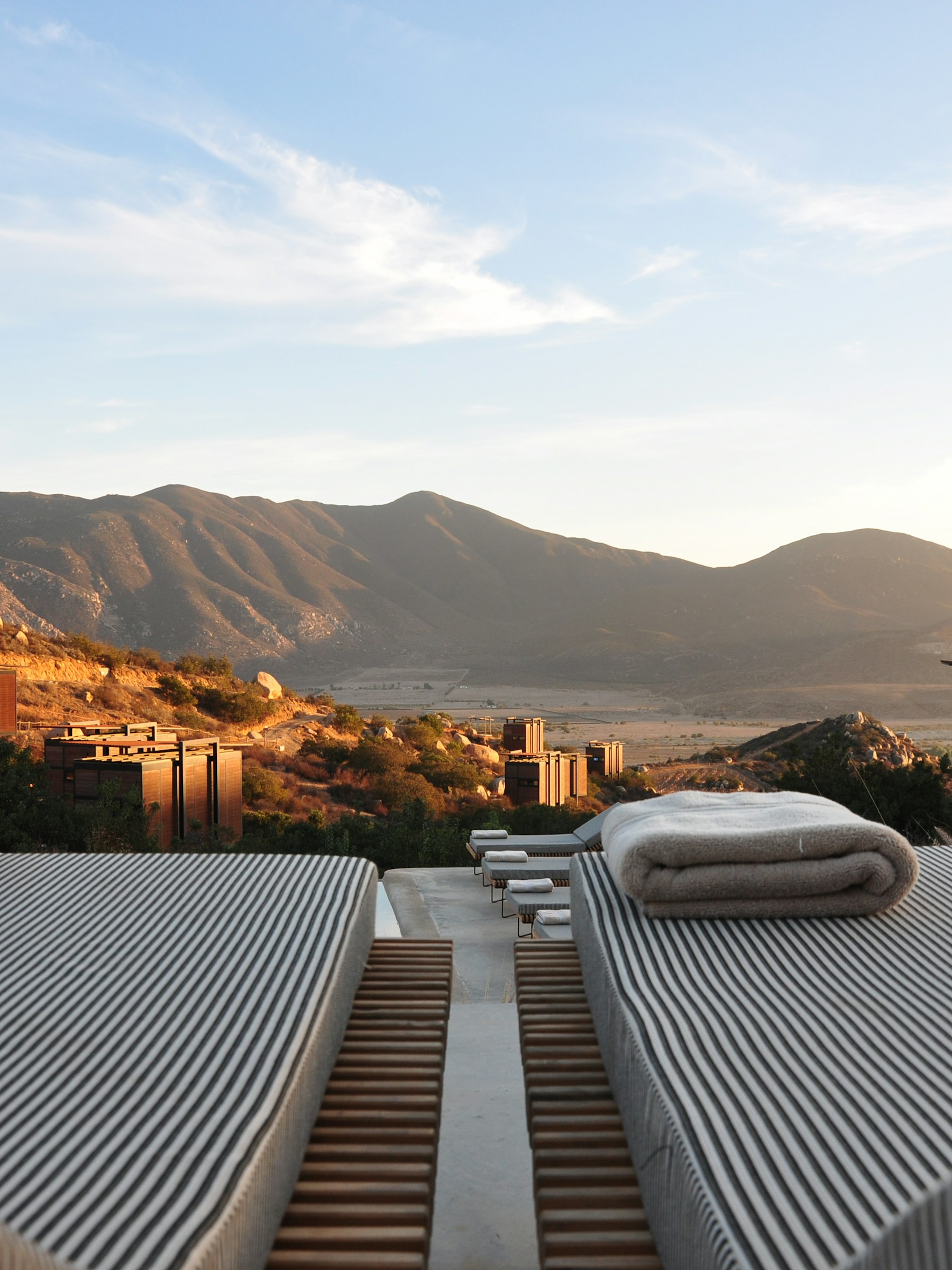
After You Return

After you return

The trip is not finished when the wheels come up.

I remain available while you travel. When you return, we debrief. What held. What should never be repeated. What you want more of next time. That conversation is part of the design, not a courtesy email.

Photographs arrive. A lodge you loved has a sister camp. A season you missed is opening. The next itinerary is easier because the first one was true.

If you already know how you like to travel, we can begin there. If you do not, that is the first conversation.

What “White-Glove” Actually Means Once You Have Left

Concierge-level service is easy to claim on a homepage. It is harder at 4 a.m. when a connection is missed, a camp transfer has moved, or a child is ill in a city you do not know. I remain reachable while you travel. That is not a chatbot and it is not a call center. It is the same person who designed the days. Preferred-partner desks at hotels and camps will take that call because the reservation sits in a relationship, not only in a confirmation number. See What Virtuoso actually gets you.

Most of what I do in those hours never appears in a photo. A table moved. A room changed. A private vehicle held. A doctor found. A day rewritten so the trip can continue. That labor is why planning is billed as work, not as a complimentary quote. I have been plain about that in Why I charge a planning fee.

The Debrief

When you are home, we talk. Not a survey. A conversation: which house you would return to tomorrow, which transfer you never want again, whether the pace was right, whether the analog days held or whether you wanted more structure, whether a first safari should become a second country or a longer stay in the same one. I keep notes. The next itinerary is not designed from a blank page. It is designed from the truth of the last one.

This is how families end up with a house they use every year, and how a couple’s first Botswana becomes a Namibia they did not know they wanted. It is also how I learn that a “favorite” hotel should never be booked for you again. Taste is allowed to change. The file should change with it.

How The Next Trip Gets Designed

Photographs arrive. A lodge you loved has a sister camp. A season you missed is opening. A villa that was not available is free in a better month. Because the first trip was true, the second is faster to design and more precise. We are not guessing at how early you will rise, whether a tent is a gift, whether you want a private vehicle, whether a city should be attached. We already know.

Repeat work is still billed, because it is still work. It is usually cleaner work. Discovery for a new traveler remains complimentary. For a returning traveler, we often begin in the middle: “same house, different month,” or “the analog version of what we did in Japan.”

If You Have Not Traveled With Me Yet

Then the debrief is the first conversation, pointed at the last trip you took with anyone. What held. What should never be repeated. What you want more of. That is enough to start. I design leisure, business, and event travel for individuals, families, and groups — safari, islands, cities, trains, private aviation, villas — with the same test: will the days feel like yours?

Begin here. If you already know how you like to travel, we can start there. If you do not, that is the work of the first twenty minutes.


How I Would Actually Do A First Safari

How I would actually do a first safari

Namibia, Botswana, Tanzania, South Africa — once, for one traveler.

A first safari is not a circuit. It is a sequence of camps, light, and quiet that has to match how you actually travel: how early you will rise, whether you want a private vehicle, whether a tented room is a gift or a test. I start there, not with a map of “the big five.”

Africa is a specialty I have kept for years. The properties I use are chosen for guiding, for the table, and for the hours after the drive — not for a list of logos. If it is your first time, we will not stack three countries because they look impressive on a page.

You will remember the evening, not the checklist.

The Mistake Most First Safaris Make

People search “best first safari Africa” and receive a map: Cape Town, Kruger, Victoria Falls, Okavango, Serengeti, perhaps a beach at the end. That is a brochure, not a trip. It spends the days in the air. It asks you to learn a new camp, a new rhythm, a new guide every two nights. You will see animals. You will not have been on safari.

A first safari should teach you how you like to be in the bush: how early you will rise, whether a private vehicle is worth it (it usually is), whether a tented room is a gift or a test, whether you want walking or only the vehicle, whether silence is the point or you want a camp that talks. Those answers do not come from stacking countries. They come from staying long enough in one landscape.

Namibia, Botswana, Tanzania, South Africa — How I Choose

South Africa is often the gentlest introduction: excellent lodges, shorter flights, a wine country or Cape Town that can hold the days before or after the bush. It is not “lesser.” It is a different density of wilderness. Kruger’s private concessions and the eastern Cape have guiding I trust. If you want a first safari with a city attached, this is often where we begin.

Botswana is water and sky — the Okavango, the Delta’s channels, camps that know how to be still. It is the right first safari if you want wilderness without performing for a crowd, and if you will accept that the days are the camp, the boat, the vehicle, the evening. We do not rush it.

Tanzania is light and distance: the Serengeti, the crater, the migration if the months are right, a coast after if you want the sea. It is the right first safari if you are willing to fly light aircraft and to let a day be long. I will not add Kenya “because we are already there” unless the trip actually needs it.

Namibia is space. Dunes, desert-adapted life, a sky that is the activity. It is the right first safari if you want landscape as much as wildlife, and if a long road is not a problem. It is the wrong first safari if you need a dense Big Five checklist in four nights.

Zambia, where I have stayed in houses that will never appear on a preferred-partner grid, belongs in a later conversation — often as a return, or for travelers who already know they want the river and a certain kind of quiet. A first trip can go there. It should not go there because a map looked complete.

Camps, Vehicles, Seasons

I choose camps for guiding, for the table, and for the hours after the drive. A beautiful tent with indifferent guiding is a bad camp. A simpler tent with a guide who can read a morning is the reason you came. Private vehicles cost more and change the day: you leave when you want, you stay with a sighting, you are not a vote in a group. For most of the travelers I work with, that is not a luxury extra. It is how safari should be done.

Season is not a footnote. Green season is not “worse.” It is different light, different water, different rates, different insects, different crowds. Dry season is not automatically better. The right month depends on the country and on you. We will not pick a date because it is famous. We will pick a date because it matches the trip.

How A First Safari Is Actually Sequenced

Two camps in one country, or one camp and a coast. Enough nights that you stop unpacking. A charter or a scheduled hop that does not eat the day. A night in Johannesburg or Nairobi treated as a landing, not as a city break, unless you want the city. Documents that tell you what to wear at 5:30 a.m. and what to leave in the second bag. Virtuoso relationships help with the lodges that sit in the network. They do not replace knowing which camp should be first. More on that access in What Virtuoso actually gets you.

If this is your first safari, tell me how you actually travel — not how you think a safari guest is supposed to travel. Discovery is complimentary. Inquire here.

What I Will Not Book

What I will not book

Taste, stated plainly.

There are bookings I will not make. Not because they are popular, and not because they are inexpensive — because they do not belong in the kind of trip I design. Buses that treat a city as a checklist. Hotels that photograph well and host poorly. Itineraries that confuse motion with meaning.

The list is not a stunt. It is how the work stays clean. If a request sits outside the practice, I say so early, before anyone has paid for a plan that should not exist.

We do not sell destinations. We design how the days feel.

Why A Luxury Travel Advisor Needs A “No” List

Search for “best luxury hotels” and you will find rooms that look identical: a pale sofa, a pool from above, a breakfast that is really a buffet with better china. Popularity is not a criterion I use. Neither is a friend’s wedding that happened to be there, nor a rate that looks clever on a Tuesday. I am responsible for how your days feel. That means declining work that would make the days worse, even if it would be easy to book.

Travelers who want an advisor to “just get me the room” will be happier on a booking engine. Travelers who want someone to refuse the wrong room — and to explain why — are the reason this practice exists.

What I Will Not Book

Group motor-coach sightseeing that treats a city as a checklist. Cruise add-ons that park you in a hall with a lanyard and a timed shop. Hotels whose entire reputation is a photograph — rooms that look edited and sound like a corridor. Itineraries that stack three countries because they look impressive on a page, especially a first safari that should have been one landscape, seen properly. Mega-resorts where the guest is an extra in someone else’s content. “Experiences” that exist to be posted. Houses that cannot host a child, a parent, or a tired traveler with any actual care, however beautiful the suite.

I will also not pretend a last-minute holiday week is the same work as a trip designed six months out. Rush is possible. It is not invisible, and it is not priced as if it were. More on how that labor is billed in Why I charge a planning fee.

What I Will Book Instead

A house on the quiet side of the hill. A camp chosen for guiding, not for a logo wall. A table that is not performing. A private vehicle on safari. A villa when a hotel would make a family commute. A train when the journey is the point. One island, done slowly, instead of three. Virtuoso amenities when they actually change the stay — breakfast that is a table, a credit you will use, an upgrade that is a better room, not a synonym. See What Virtuoso actually gets you.

Africa, Japan, the Maldives, Chile and Argentina, Australia, Spain, Italy, France, Namibia, Botswana, Tanzania — these are places I know how to pace. I will not take a trip I cannot stand behind. If your dates and your taste need a different kind of advisor, I will say so in discovery, before anyone has paid.

Who Is A Fit

People who already suspect that more is not better. Families who want the days to hold. Travelers planning a first safari who would rather do one country well. Anyone asking for “the analog escape” rather than a highlight reel. If that is you, begin with a conversation. If it is not, the no list has already done its job.

The Analog Escape

The analog escape

A day paced so you are not collecting sights.

The analog escape is not a rejection of the modern world. It is a refusal to let the trip become a feed. Fewer stops. A house on the right side of the hill. A table that is not performing for a camera. Time left unscheduled on purpose.

I design for how the days feel: the light in a room at six, the walk that does not need a ticket, the dinner that does not require a costume. When the itinerary is right, you put the phone down without being asked.

What Analog Travel Actually Means

Travelers search for “slow travel,” “digital detox trips,” and “unhurried luxury itineraries” when they are tired of collecting. They have done the nine-city tour. They have eaten in rooms designed to be photographed. They have stood in a lobby that was really a set. Analog travel, as I use the phrase, is not a ban on phones. It is a day that does not require an audience.

That is a design problem. It is not a packing list. It means choosing a house for the hour the light hits the terrace, not for a suite category on a diagram. It means one market in the morning, not three monuments. It means a driver who knows when to be silent. It means leaving Tuesday afternoon blank on purpose, and defending that blank when a well-meaning host offers another tasting.

How I Pace A Day

I start with sleep, meals, and walking distance. Not with a map of highlights. If you do not like early starts, we will not build a safari as if you do. If you want a long lunch, the afternoon activity yields. If a city is best on foot, we stay where the walk is the point, not in a tower that requires a car for every coffee.

Three good days in one place will almost always outlast six adequate ones in six places. That is true in Kyoto, in the Luberon, in a Maldives house, in a Patagonian lodge, in a single Namibian concession. Motion is easy to sell. Stillness is harder, and more expensive to do well, because it requires the right room and the discipline to stop adding.

Houses, Tables, Walks

The analog escape lives in three choices. The house: a room that is quiet at night, a bath you will actually use, a view that does not need a caption. The table: one that is not performing, where the wine list is for drinking, not for display. The walk: a route that does not require a timed ticket, or a guided hour that is actually a conversation.

I keep a private list of houses that hold this kind of day — in Japan, France, Italy, Spain, Chile, Argentina, Australia, the Maldives, and the safari countries I know well. Some are Virtuoso hotels. Some are villas. Some are camps. The filter is the same: will you put the phone down without being asked?

Where Analog Travel Works, And Where It Does Not

It works in places that already have a pace: a ryokan that closes the kitchen at a human hour, a Provençal house with a pool you can hear from the bedroom, an atoll where the reef is the activity, a desert camp where the evening is the point. It works poorly in itineraries built as a highlight reel — capital to capital, one night each, a “best of” that is really a commute.

If you want that reel, I am not the advisor. I wrote the other side of this in What I will not book. If you want fewer stops and a better room, that is the conversation. Discovery is complimentary. Inquire here.

Why I Charge A Planning Fee

Why I charge a planning fee

Planning is not an add-on. It is the work.

The fee is for judgment, access, and the hours no one sees: the floor plan of a house, the “no” list, the call that holds a suite while another option is still being weighed. Discovery is complimentary. Design time is paid. Planning is quoted for the travelers who commission the itinerary, and it is non-refundable.

I do not credit strategy hours toward planning, and I do not pretend a form can replace a conversation. If the work is worth doing, it is worth naming.

Fees live on a private page. If you want the numbers, ask. If you want the trip, we begin with how you like to travel.

Why A Luxury Travel Advisor Charges A Fee

Most people who search “travel advisor fees” have been trained by airlines and hotel sites to think the work is free because the booking is not. That model is a commission on a rate. It rewards volume. It does not pay for the hour spent reading a floor plan, declining a camp that would look impressive on a page, or holding a suite while a second house is still being walked.

I charge a planning fee because the work is the design, not the click. J Ángelle Luxury Travel is a Virtuoso-affiliated practice. Preferred-partner amenities, upgrades, and credits often arrive with the reservation. They do not replace the labor of deciding what should be reserved. If you want a cheaper ticket to a full hotel, you do not need me. If you want the day to feel a certain way, you do.

What The Fee Actually Covers

Judgment. Access. Time. A planning fee pays for the research that never appears on an invoice line: which wing of a house is quiet, which safari camp has the guiding you actually want, which island transfer will not leave you standing in a humid hall, which week in the Luberon is still itself. It pays for the calls that hold space while we decide. It pays for the “no” list — the properties and itineraries I will not put your name on, even if they are available.

It also pays for documents that are usable: a sequence of days, not a stack of confirmations; transfers that match how you land; a plan for what happens if a flight moves. While you travel I remain available. When you return, we debrief. That is not a courtesy email. It is part of the work, and I have written about it in After you return.

Discovery Is Complimentary. Design Is Not.

The first conversation is 20 to 25 minutes. There is no credit card. We establish whether I am the right advisor and whether the trip belongs in this practice. If it does not, I say so. If it does, we move to paid design time — a working session in which we get specific: season, pace, privacy, the table, the house, the people traveling.

I do not credit design hours toward planning. Strategy is not a deposit on a later booking. Planning is quoted for the travelers who commission the itinerary. Simple trips and expedition-scale trips are not the same work, so they are not the same fee. Last-minute work, holiday windows, and complex groups are quoted accordingly. Air can be ticketed. Concierge hours exist for work that is not an itinerary. None of that is a surprise I spring after you are already in. It is named before we begin.

Why Planning Fees Are Non-Refundable

All professional fees here are non-refundable and non-transferable. The hours happen whether or not you later take the trip. A held suite, a researched camp, a declined alternative — that labor cannot be put back on a shelf. I will not pretend otherwise. Travelers who want a free “quote” they can shop to three other desks are not a fit. Travelers who want the work done once, properly, are.

How We Begin

If you want the numbers, ask. They live on a private page for a reason. If you want the trip, we begin with how you like to travel: analog or scheduled, one country or a sequence, a first safari or a return to a house you already love. Virtuoso access is part of what you receive. It is not a substitute for paying for the design. More on that in What Virtuoso actually gets you.

Start with a complimentary discovery conversation.